Measuring the price a home's view commands across Sydney. Microburbs Research, 2026.
 Microburbs Research, Sydney, 2026. Authored by Luke Metcalfe.
Abstract. Two homes of similar size on the same street can sell for very different prices, and one of the largest reasons is what each can see. This paper measures the price premium a home's view commands across Sydney. For every home we establish what it can actually see, be it water, a city skyline or bushland, and how strong that view is, then compare its price against closely matched homes without it. A clear, open water view adds around +7% to a home's price on its own, and a wide view that is the home's headline feature can reach +13%; a thin glimpse adds almost nothing. The premium climbs steeply with how much water is in sight, has held firm across more than two decades, and is concentrated in a small number of suburbs.
Buyers and valuers agree that a view matters, yet the word covers everything from a wide blue harbour horizon to a thin sliver of water between two roofs. The questions this work answers are simple: does a view raise a home's price, by how much, and which kinds of view carry the premium, once you set aside the things that travel with views, such as a bigger block, an elevated position, or simply a more expensive suburb.
For every home we determine two things: what it can genuinely see, and how strong that outlook is, from a full, open panorama down to a passing glimpse. This is a physical assessment of what is actually visible from the home, so it does not depend on how a property is advertised.
We then cross-check that physical view against the words used to describe the home. The two agree about 19 times out of 20 on whether a home has a view, which is how we know we are measuring a real outlook rather than marketing language. Notably, more than two in five homes advertised with a water "view" do not have a genuine one once checked against what is physically visible, a sliver, or simply being near the water rather than seeing it. Those homes earn almost none of the premium a real view commands. Finally, we compare each home's price against closely matched homes that cannot see the same thing, so the figure we report reflects the view itself rather than the house around it.
Our maps colour each small area by what its homes can see. The deeper the colour, the stronger the view.
The map below applies the colour key to every microburb across Mosman, Double Bay, Kirribilli, Vaucluse, Castlecrag and their neighbours (all Sydney). The pins mark the five matched pairs presented below: a filled blue pin is the home with the water view, a white pin its matched no-view neighbour. Data as at June 2026.
The figures below show how much more a home with each kind of view sells for than a comparable home without one, in the same suburb.
| What the home sees | Premium vs a matched no-view home |
|---|---|
| Water, a thin glimpse | next to nothing |
| Water, a moderate outlook | around +2% |
| Water, a wide open view | around +7% |
| Water, a wide view that is the home's headline feature | up to +13% |
| City skyline | little on its own |
| Bushland or leafy outlook | little on its own |
| Open outlook, no standout feature | little on its own |
Compared with an otherwise identical home, same size, similar slope, same suburb. Stripped of those, the view's own contribution is what remains; the larger 20 to 30% gaps are mostly the home and the land.
The ladder is easiest to see in matched pairs: two homes of the same size, in the same spot, sold close together in time, where the only material difference is what they can see. These are real Sydney sales, drawn from records that run to June 2026. Where a sale campaign photographed the view itself, the photograph is reproduced.
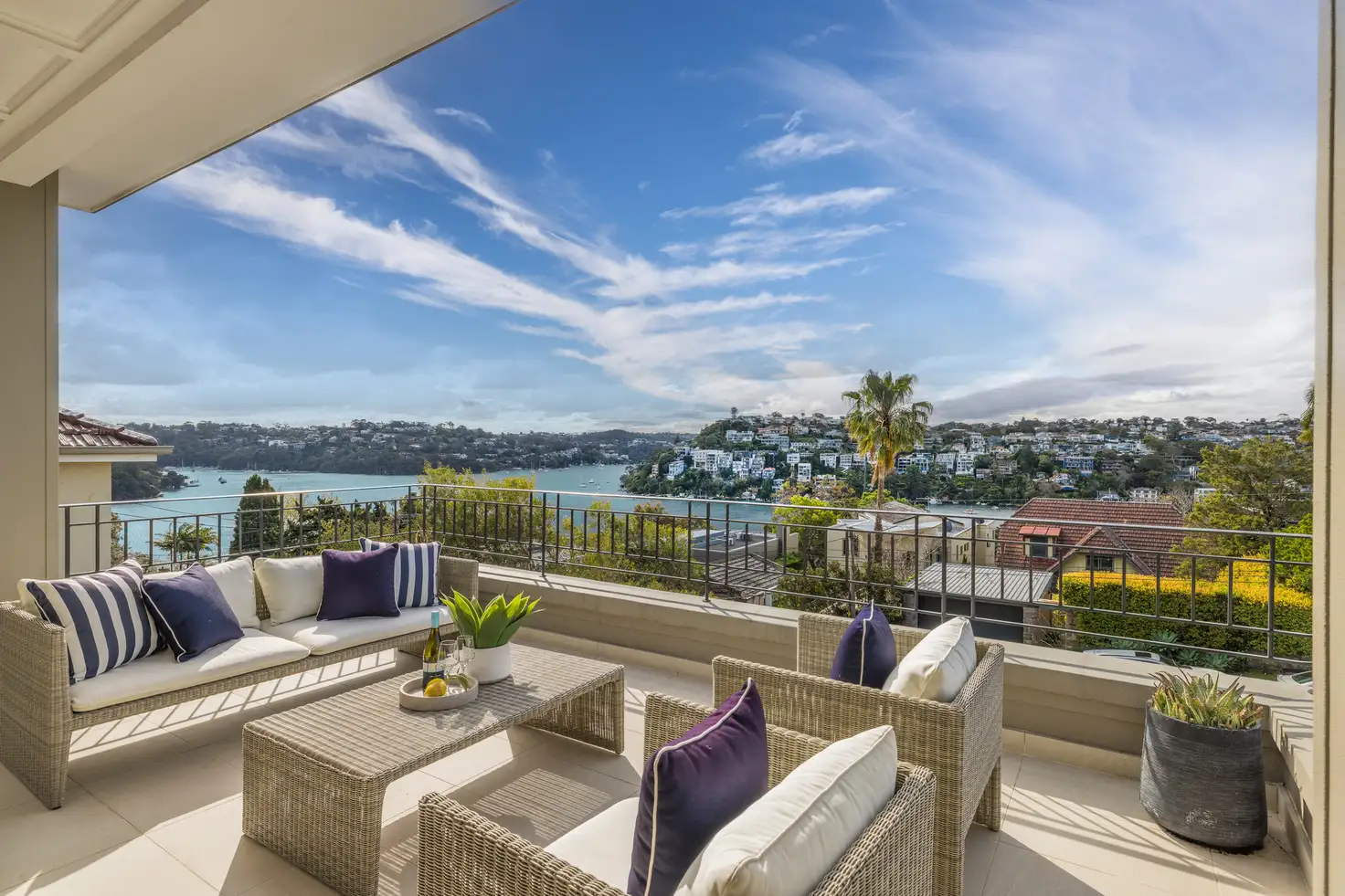
17 Stafford Street, a three-bedroom house with a narrow water glimpse, sold for $1.94 million in September 2011. Around the corner, 46 William Street, a three-bedroom house with no view, sold for $1.95 million in March 2013. The glimpse commanded nothing.
6 Shadforth Street, a five-bedroom house with a wide, open water view, sold for $7.0 million in April 2024. On the same street, 18 Shadforth Street, also five bedrooms and without the view, sold for $6.6 million in November 2024. The margin is about $400,000, or 6%, in line with the wide-view tier in the table above.
105 Broughton Street, a three-bedroom house looking out over a cove of moored boats, sold for $3.41 million in March 2024. Six weeks earlier and a few doors along, 109 Broughton Street, also three bedrooms but without a genuine water view, sold for $3.2 million. The margin is about $200,000, or 6%, again in line with the wide-view tier.
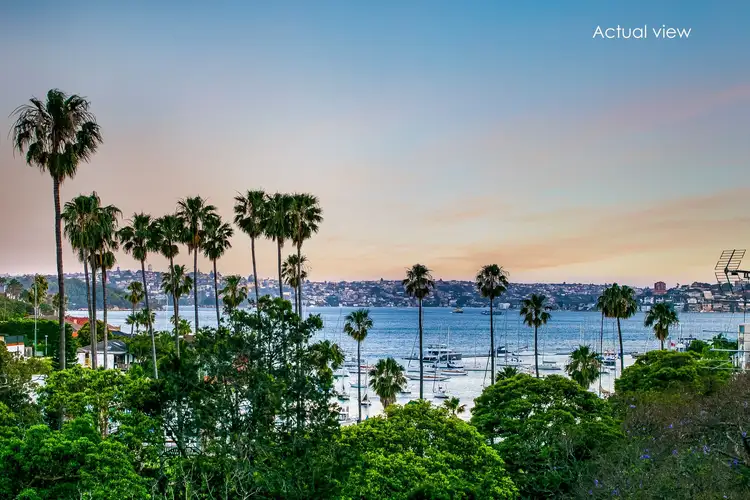
16 Clanalpine Street, a five-bedroom house whose harbour panorama led its sale campaign, sold for $12.5 million in September 2025. On the same block, 18 Mistral Avenue, also five bedrooms, with the water shut out by its neighbours, sold for $10.8 million in April 2024. The view accounted for about $1.7 million, or 16%.
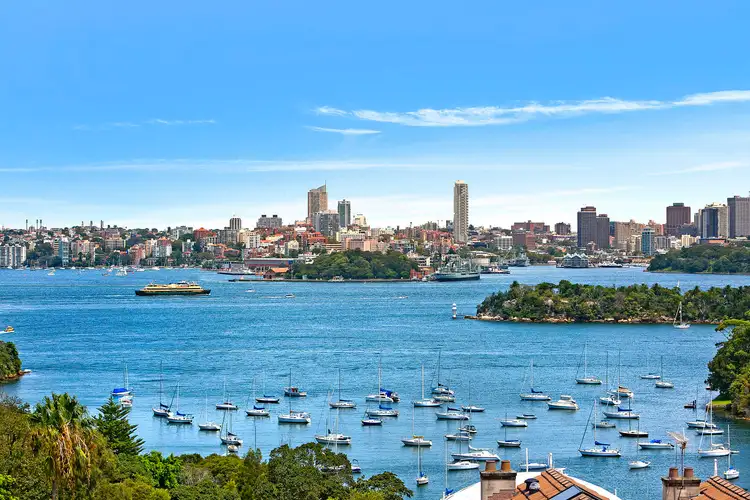
The tightest pair in the study. 4 Burton Street, a four-bedroom house whose unobstructed outlook over Middle Harbour was the home's headline feature, sold for $3.10 million on 22 December 2014. Next door, 2 Burton Street, also four bedrooms, with the water hidden behind its neighbours, sold for $2.73 million twelve days earlier. Same street, same size, same fortnight. The view accounted for about $375,000, or 14%.
Single pairs illustrate rather than prove. The figures in the table above come from comparing thousands of such homes, not these three alone.
To make the finding concrete, consider two Sydney suburbs on the Lower North Shore.
A leafy peninsula where the prize is water glimpsed through the bush. Homes on the right ridge look out over Middle Harbour; a few doors back, the same kind of home with the water screened by trees is worth noticeably less, on the same street. Castlecrag shows the value of separating a real water outlook from a merely leafy one.
Closer to the harbour the views open up, and so does the premium. A wide, protected harbour outlook here is among the most valuable features a home can have, and it is the kind of view the market pays up for again and again.
A home's view is a real and measurable part of its price, distinct from the size of the home, its land, and its suburb. For water it climbs from almost nothing for a glimpse to around +7% for a wide, open view, and up to +13% when that view is the home's headline feature. It is consistent across more than two decades and concentrated where water is in sight. For anyone valuing a home or weighing what to pay, knowing exactly what a property can see, and how strong that view is, removes one of the largest blind spots in a price.